In the fast-paced world of logistics and warehousing, efficiency is everything. However, a common obstacle often stands in the way of a smooth workflow: the height gap between a transport truck and the loading dock. This is where the dock leveler becomes the unsung hero of your facility.
If you are managing a warehouse or a distribution center, understanding how this piece of equipment functions is critical for safety and operational success.
What Is a Dock Leveler?
A dock leveler is a specialized piece of equipment installed at a loading dock to bridge the gap between the dock floor and the bed of a trailer or truck. Because trucks vary in height and often shift or “bounce” during the loading process, a dock leveler provides a stable, sloped surface that allows forklifts and pallet jacks to move in and out of the vehicle safely.
The Different Types of Dock Levelers
Choosing the right equipment depends on your volume of traffic and budget. Most businesses utilize one of these three primary types:
Mechanical Dock Levelers
Mechanical dock levelers are a cost-effective, durable solution for facilities with moderate traffic. Operated by a manual pull-chain, they utilize a spring-loaded mechanism to deploy the platform and lip. Because they require no electrical power, they remain functional during outages and are simple to maintain. They are ideal for businesses seeking a reliable, budget-friendly bridge for standard loading tasks.
Hydraulic Dock Levelers
Designed for high-volume environments, hydraulic dock levelers offer the ultimate in performance and ergonomics. With simple push-button operation, the system uses hydraulic cylinders to lift the deck and extend the lip smoothly. This automated process reduces physical strain on workers and increases safety. Their heavy-duty construction makes them the most durable choice for demanding, fast-paced warehouse operations and heavy loads.
Air-Powered Dock Levelers
Air-powered dock levelers provide an efficient middle ground between mechanical and hydraulic systems. Utilizing a high-volume, low-pressure air bag, these levelers raise the platform with the touch of a button. This design eliminates the complexity of hydraulic fluids while remaining easier to operate than manual versions. They are highly resistant to environmental debris, making them a clean, low-maintenance option for modern docks.
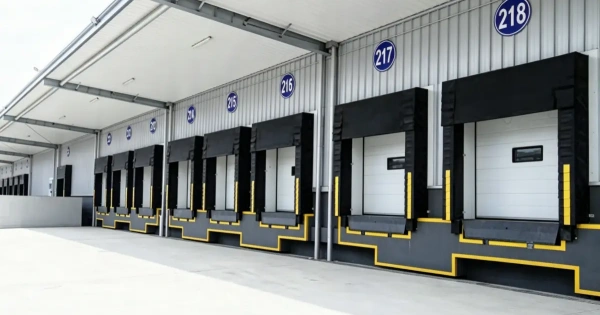
Why Dock Levelers Are Essential for Your Business?
A dock leveler is more than just a metal bridge; it is a critical investment in your facility’s infrastructure. By neutralizing the height gap between trailers and the loading bay, these systems create a seamless transition for material handling. This connectivity is vital for reducing physical labor, preventing costly structural damage to your warehouse floor, and ensuring your logistics chain remains uninterrupted, ultimately protecting your bottom line and professional reputation.
Enhanced Personnel Safety
Safety is the cornerstone of any successful warehouse operation. Dock levelers eliminate the dangerous “gap” that causes forklift tip-overs and “dock shock,” which can lead to chronic back injuries for operators. By providing a stable, level surface, you significantly reduce the risk of workplace accidents, lowering insurance premiums and ensuring your team remains healthy, confident, and productive every day.
Increased Operational Efficiency
Time is money in the logistics industry. Dock levelers streamline the loading process by allowing forklifts to drive directly into trailers without manual adjustments or makeshift ramps. This speed facilitates faster truck turnaround times and higher throughput. By removing bottlenecks at the loading bay, your business can handle a higher volume of shipments per shift, maximizing your overall warehouse output.
Protection of Goods and Equipment
Smooth transitions preserve the integrity of both your fleet and your inventory. Bumping over uneven gaps causes unnecessary wear on forklift tires and transmissions, leading to frequent maintenance costs. Furthermore, stable transport prevents fragile cargo from shifting or falling, reducing product loss. Investing in a quality leveler ensures that your equipment lasts longer and your goods arrive at their destination undamaged.
Adaptability to Various Vehicles
The modern shipping landscape involves everything from small delivery vans to massive semi-trailers. Since truck bed heights are never uniform, a dock leveler provides the necessary range of motion to service diverse fleets at a single bay. This versatility ensures your facility can accept any shipment, making your business more flexible and better equipped to handle varying client demands.
Conclusion
Investing in the right dock leveler is a strategic move that transforms your loading bay into a safe, high-speed gateway for commerce. By eliminating height gaps and stabilizing the transition between truck and dock, you protect your workforce, extend the lifespan of your machinery, and accelerate delivery timelines. Prioritizing this essential equipment ensures your facility remains competitive, adaptable, and ready to meet the rigorous demands of modern logistics.