The loading dock was once the most overlooked part of the warehouse, often seen as a simple “point A to point B” transition zone. However, as we move through 2026, the loading dock has officially become the intelligent nerve center of the modern supply chain.
Driven by the need for breakneck speed and a shrinking labor pool, dock equipment is undergoing a massive digital transformation. Here are the top trends shaping the loading docks of 2026.
The Rise of the “Connected” Smart Dock
In 2026, the loading dock has evolved into an intelligent data hub. No longer just mechanical platforms, “connected” smart docks utilize IoT sensors and cloud-based software to synchronize facility operations. By integrating dock levelers and vehicle restraints with a centralized management system, managers gain total visibility over equipment status. This digital transformation eliminates operational blind spots, streamlines trailer throughput, and ensures the loading dock is a proactive contributor to supply chain efficiency.
Real-Time Logistics
The modern dock utilizes real-time tracking to bridge the gap between the yard and the warehouse. Integrated sensors monitor bay occupancy and loading progress, feeding live data directly into Warehouse Management Systems (WMS). This instant visibility allows for precise scheduling, reduces driver detention fees, and enables managers to reallocate labor dynamically, ensuring that every minute a trailer spends at the dock is maximized.
Predictive Maintenance
By leveraging AI-driven analytics, dock equipment now identifies potential failures before they cause costly downtime. Sensors track cycle counts, motor temperature, and hydraulic pressure, alerting maintenance teams to wear and tear in real time. This shift from reactive to proactive care extends the lifespan of dock levelers and doors, reduces emergency repair expenses, and ensures that warehouse operations remain uninterrupted.
Autonomous Loading & Robotic Integration
The labor shortage in the logistics sector has accelerated the adoption of automated loading solutions. We are seeing a surge in:
AGV-Ready Dock Levelers
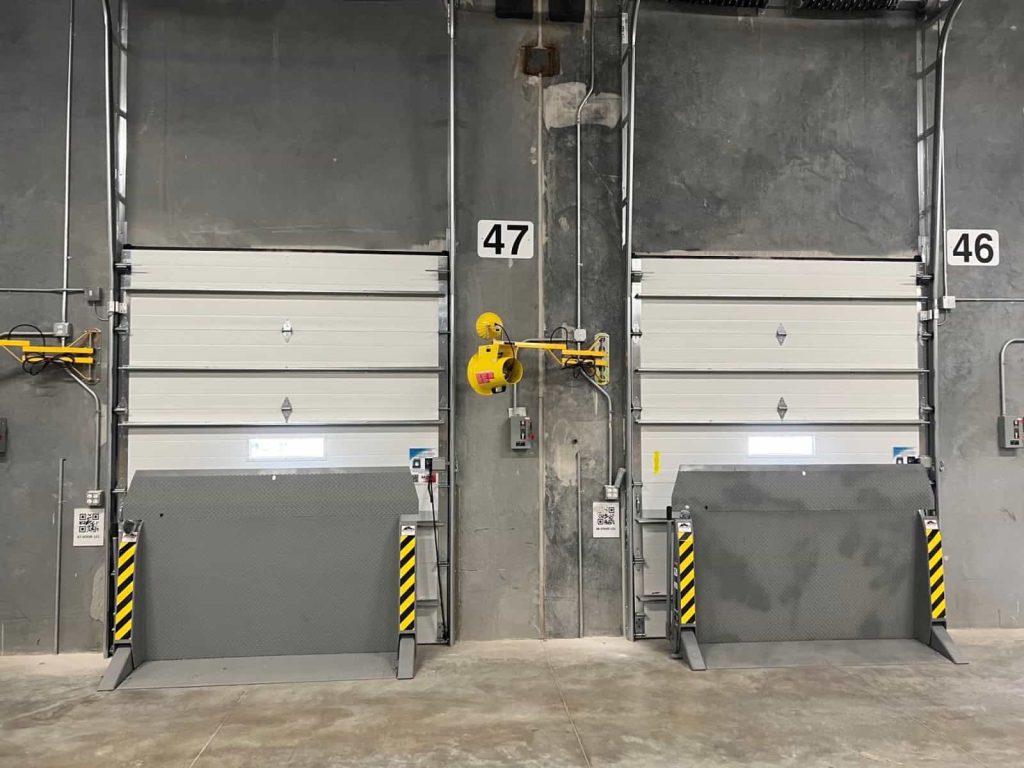
Modern facilities are increasingly adopting automated guided vehicles to streamline material handling. AGV-ready dock levelers are engineered with specialized sensors and high-precision lip transitions to accommodate robotic traffic. These systems ensure a perfectly smooth surface, preventing the jarring impacts that can disrupt sensitive electronic sensors. By eliminating floor gaps, these levelers allow robots to enter and exit trailers with total autonomy.
Automated Trailer Restraints
Safety is paramount in high-volume environments, and automated trailer restraints have become the gold standard. These systems utilize advanced detection technology to automatically secure a vehicle’s rear impact guard upon arrival. By removing the need for manual intervention, they eliminate human error and prevent dangerous “early departures.” This automation ensures a constant, fail-safe connection that protects both dock workers and equipment.
Advanced Safety: Beyond the “Red/Green” Light
Safety standards in 2026 have moved beyond simple light communication. The latest equipment focuses on active hazard prevention:
Motion Sensors & Blue Lights
Advanced motion-sensing technology has redefined pedestrian safety in the modern warehouse. These systems detect approaching forklifts or personnel near the dock, instantly projecting high-visibility blue LED patterns onto the floor. This visual warning is crucial in high-noise environments where traditional alarms might be missed. By creating a clear “danger zone” around active bays, these lights effectively prevent collisions and improve awareness.
Interlocking Controls
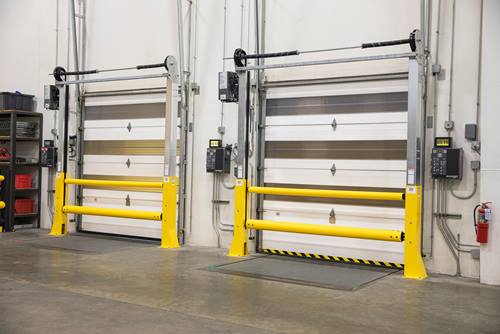
Interlocking control systems act as the ultimate safety fail-safe for loading operations. By synchronizing the dock leveler, vehicle restraint, and overhead door, these systems ensure equipment only operates in a specific, safe sequence. For example, the door cannot open until the trailer is locked, and the leveler won’t deploy until the restraint is engaged. This sequence eliminates human error and accidents.
Energy Efficiency & Environmental Control
Modern warehouses prioritize sustainability by treating the loading dock as a critical thermal barrier. Energy-efficient equipment reduces HVAC strain while maintaining strict temperature requirements for sensitive goods. By integrating high-performance seals and automated doors, facilities significantly cut energy waste and carbon footprints. These environmental controls not only support corporate “green” initiatives but also protect products from outside contaminants, moisture, and pests, ensuring a more stable and cost-effective internal environment.
High-Seal Dock Shelters
High-seal dock shelters are essential for maintaining an airtight connection between the warehouse and the trailer. Using advanced, wear-resistant fabrics and compressive foam, these shelters close the gaps around the top and sides of a vehicle. This level of environmental control prevents conditioned air from escaping, keeping energy costs low and ensuring the integrity of temperature-sensitive inventory during loading.
Vertical Levelers
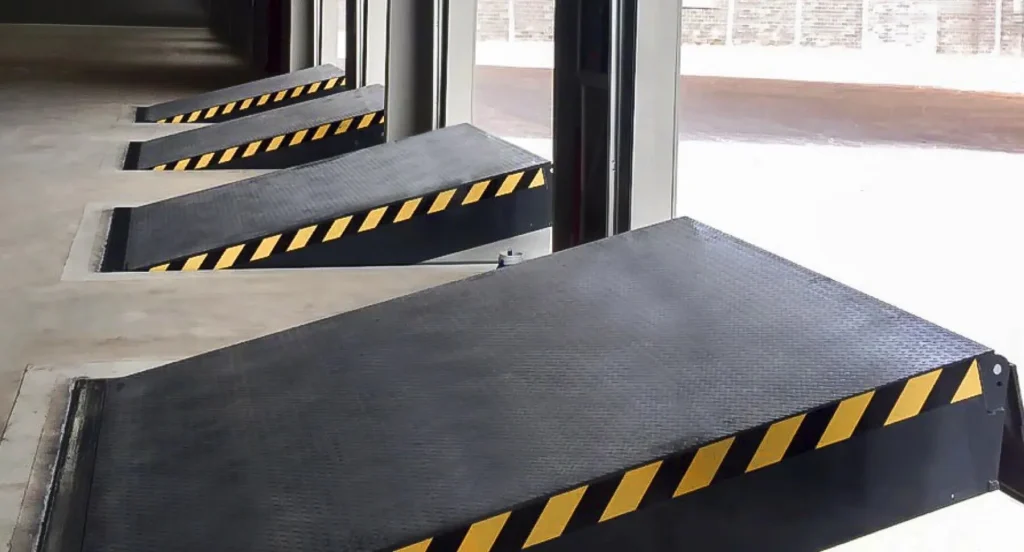
Vertical-storing levelers are the premier choice for facilities requiring maximum environmental control. By storing upright inside the building, they allow trailer doors to remain closed until the vehicle is fully docked. This “drive-through” design prevents external air infiltration and debris from entering the warehouse. They are easy to clean and provide a superior thermal seal when not in use.
High-Speed, High-Cycle Doors
Standard overhead doors are being replaced by high-speed fabric or insulated doors. In a high-volume 2026 environment, every second the door is open is a second of lost energy and security. Modern doors now operate at speeds of up to 100 inches per second, minimizing the “open-door” window significantly.
Final Thoughts
The loading dock has officially transitioned from a simple transition point to a high-tech cornerstone of the modern supply chain. By embracing IoT connectivity, automated safety systems, and sustainable design, facilities can significantly boost throughput while lowering operational costs. As we move through 2026, investing in these advanced dock technologies is no longer optional—it is the key to maintaining a safe, efficient, and competitive edge in an increasingly automated world.