Replacing a garage door is one of the highest-ROI home improvement projects in the United States. It instantly boosts curb appeal and enhances home security. However, for many homeowners, the actual installation day can feel like a logistical mystery.
Knowing what happens from the moment the truck pulls up to the final safety test helps you prepare your home and ensures a seamless transition. Here is exactly what you should expect during a professional garage door installation.
Pre-Arrival Preparation
Proper preparation is the foundation of a successful garage door installation. Before the technicians arrive, take a moment to review the project scope and clear a path for the heavy equipment. Ensuring the workspace is ready allows the crew to begin immediately, reducing labor time and potential delays. A well-prepared site not only speeds up the process but also ensures a safer environment for both your family and the installation team.
Clear the Area
To ensure a seamless installation, please remove all vehicles from the driveway and garage. Move bicycles, lawn equipment, and storage bins at least ten feet away from the door opening. Providing an unobstructed workspace allows technicians to maneuver large panels and heavy tracks safely. A clear area prevents accidental damage to your personal belongings and gives the crew the space needed for precision.
Pet & Child Safety
A garage door installation is a complex construction zone involving high-tension springs and heavy moving parts. For the safety of your loved ones, please keep children and pets inside the home or away from the garage throughout the day. Constant movement and loud noises can be stressful for animals, and restricted access ensures everyone stays clear of the active work area.
Power Access
Your installation team will need a reliable power source to operate tools and program your new garage door opener. Ensure there is a functional, accessible electrical outlet within the garage. If you are upgrading to a smart system, having your Wi-Fi password ready is also helpful. Clear access to the power supply ensures the motor and safety sensors are calibrated perfectly.
Removing the Old System
The process begins with the teardown. This is often the most dangerous part of the job because of the torsion springs. These springs are under immense pressure and require specialized tools to unwind safely.
The team will dismantle the old panels, remove the heavy-duty tracks, and dispose of the old hardware. Most reputable local installers include haul-away services in their quotes, leaving you with a clean workspace.
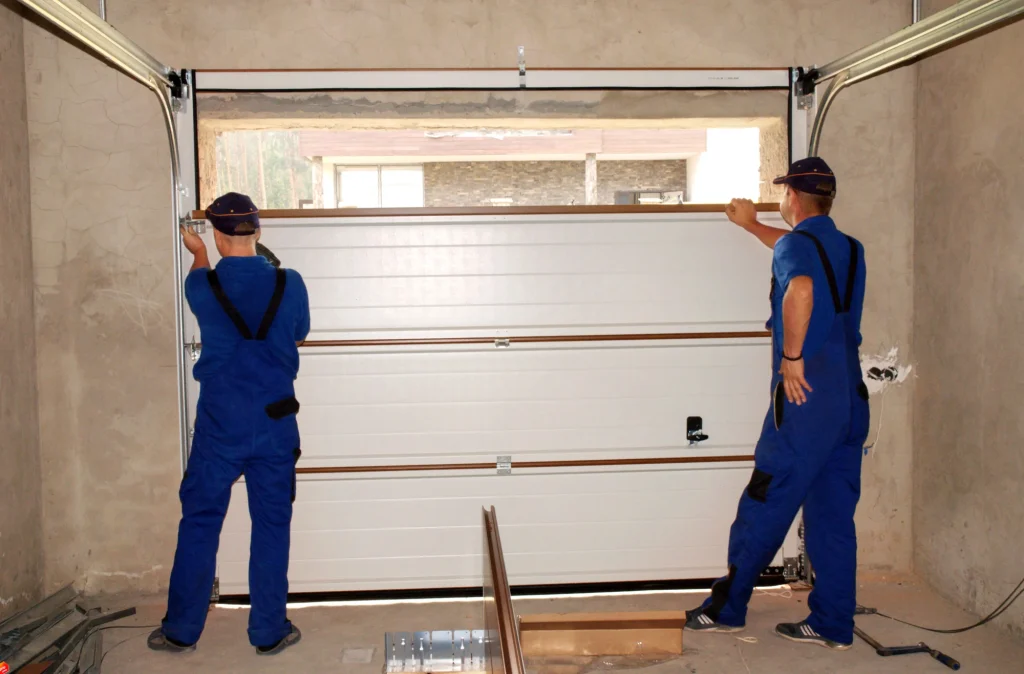
Setting the New Tracks and Rollers
The structural integrity of your garage door depends entirely on the precision of the tracks and rollers. Technicians meticulously align these components to ensure the door glides effortlessly without friction or noise. Properly set tracks prevent the door from binding or slipping off course, which could cause significant safety risks. By utilizing heavy-duty steel and precision leveling tools, professionals create a stable framework that supports the door’s weight and ensures long-term operational reliability.
Vertical Tracks
Vertical tracks are the essential foundation fastened directly to the door frame. Installers use levels to ensure these are perfectly straight, as even a slight tilt can cause the rollers to wear down prematurely. Securely anchored with heavy-duty brackets, these tracks provide the necessary stability to hold the door panels in place while they are in the closed position.
Horizontal Tracks
Once the vertical sections are secure, horizontal tracks are installed to guide the door across the garage ceiling. These are reinforced with sturdy back hangs and angled steel to support the door’s full weight when open. Proper alignment here is vital for a smooth transition, ensuring the door moves quietly and remains perfectly balanced throughout its entire cycle of motion.
Panel-by-Panel Assembly
The installation process is a meticulous, bottom-up assembly where each section is layered with precision. The first panel is the most critical, as it must be perfectly level to ensure the entire stack remains aligned. Technicians secure heavy-duty hinges and rollers to each section before hoisting the next into place. This systematic approach ensures a tight weather seal and prevents structural gaps, resulting in a durable and energy-efficient garage entrance.
The Spring System: The “Heavy Lifter”
While many assume the motor does the work, the spring system is the true engine behind every cycle. These components counteract the door’s immense weight, allowing it to be moved with minimal effort. Professional installers carefully calculate the specific tension required based on the door’s material and size. Without a properly calibrated spring system, the opener would burn out quickly, and the door would become a significant safety hazard for homeowners.
Torsion Springs
Torsion springs are mounted on a sturdy metal shaft directly above the garage door opening. During installation, technicians use specialized winding bars to apply precise torque to these coils. This stored energy is what actually lifts the door’s weight. Because they operate under extreme tension, professional handling is mandatory to ensure the system is secure and functions reliably for thousands of cycles.
Balance Check
Once the springs are tensioned, a critical balance check is performed. The technician will disconnect the opener and manually lift the door halfway. A perfectly balanced door will stay in place without drifting up or sliding down. This test confirms that the springs are doing their job correctly, preventing unnecessary strain on the motor and ensuring safe, smooth manual operation during power outages.
Opener Installation & Safety Testing
Once the door is balanced, the motor is connected. In today’s market, this often includes syncing smart-home technology and Wi-Fi connectivity.
The final, and most important, step is the Safety Reverse Test. Federal law requires garage doors to reverse if they detect an object (or a pair of photo-eye sensors is blocked). The installers will verify that the sensors are aligned and the force settings are calibrated correctly.
Final Thoughts
A professional garage door installation is a complex process that demands technical precision and a focus on safety. From the initial preparation to the final calibration of the spring system, every step ensures your home remains secure and your door operates reliably for years. By trusting expert technicians to handle the heavy lifting and high-tension components, you protect your investment and enjoy the peace of mind that comes with a job well done.